

How to Hire a Safe, Licensed Roofing Contractor in Hampton Roads
Before you sign anything, read this. Better View Roofing and Siding walks Hampton Roads homeowners through the 12 questions every contractor must answer, plus what to look for in a license, insurance certificate, and written contract.


#1 Rated Roofing & Siding company in Virginia Beach
Knowing how to tell a legitimate contractor from a bad one
before money changes hands or a contract gets signed is one of the most important things a Hampton Roads homeowner can do.
You just found out your roof needs to be replaced. Or storm damage took out three shingles and a section of fascia.
You search for a roofer, and suddenly your phone is ringing from numbers you do not recognize and your door gets a knock from someone carrying a clipboard and a company shirt you have never seen before.
We put this page together because we believe an educated homeowner makes the best client. If you read this and decide to call us, great. If you read this and use it to vet someone else, even better. This information protects you either way.

That sounds harsh. But the reality in Hampton Roads is that after any significant storm event, out-of-state crews and unlicensed contractors flood the area. They are not your neighbors. They do not carry Virginia contractor licenses. They will not be here when something goes wrong six months later.
The rules below are not scare tactics. They are the exact questions a licensed, insured, reputable contractor should be able to answer on the spot.
Ready to verify us first? Good.
Better View Roofing and Siding is a licensed Virginia Class A contractor. Our license number, insurance certificates, and manufacturer credentials are on file and available on request. Ask us anything on this list.
The 12 Rules Every Hampton Roads Homeowner Should Follow Before Hiring a Roofer
Work through this list with any contractor you are considering. A legitimate company will not flinch at any of these questions.

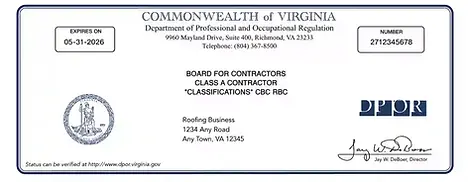
✓ Ask to see their licenses - both business and contractor.
In Virginia, anyone contracting for work over $1,000 must hold a valid contractor license issued by the DPOR (Department of Professional and Occupational Regulation). There are three classes: A, B, and C. Class A is the highest. A contractor license is not the same as a business license, you want to see both. If they cannot produce them on the spot, they are operating illegally. It is the equivalent of driving without a driver's license.
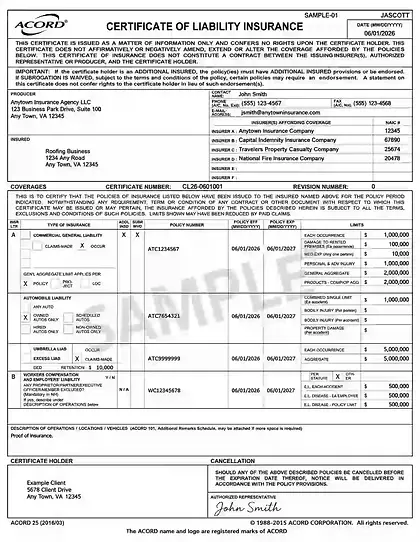
✓ Ask to see proof of insurance - general liability and workers' comp.
Request a Certificate of Liability Insurance with your name and property listed as the certificate holder. If a worker is injured on your roof and the contractor carries no workers' comp, you may be liable. If something goes wrong and they carry no general liability, you pay for it. A contractor who cannot hand you an insurance certificate on demand is operating without a net and the homeowner is the one who falls.
✓ Ask who pays if something goes wrong.
Beyond the certificate, ask directly: "If your crew damages my gutters, my HVAC unit, or my siding in the course of this job, how is that handled?" The answer tells you everything about how they run their business.
✓ Check with DPOR.
Virginia's Department of Professional and Occupational Regulation is the state licensing authority for contractors. You can verify any contractor's license status at dpor.virginia.gov. DPOR has real enforcement authority, unlike the Better Business Bureau, which can only publish complaints. Both are worth checking.
✓ Check with the Better Business Bureau.
BBB ratings are not a guarantee of quality, but complaint history is useful context. A string of unresolved complaints is a signal. No history at all on an established local company is also worth a follow-up question.
✓ Always get three quotes.
Not because the middle price is always the right one, but because three quotes give you a baseline for what the job should cost. Ask each contractor to walk you through their line items. If one quote is dramatically lower than the others, ask why. The answer is usually in the materials or the warranty.
✓ Ask to see their current work.
A reputable company that has an active job site will let you drive by and see it. You do not need to walk the roof — just see how the crew operates, how the property is protected, and whether the site is clean and organized. That tells you a lot about how they will treat your home.
✓ Watch for sales pressure.
There is no such thing as a "sign today to get this price" deal in legitimate roofing. Materials pricing does not work that way. If a contractor tells you the quote expires in 24 hours or that you will lose your spot on their schedule if you do not sign now, that is a pressure tactic. Walk away.
✓ Find out if the work will be subcontracted.
Ask who will actually be on your roof. Will it be the company's own employees or a subcontracted crew? If it is subcontracted, ask for the names of the individuals and confirm they are also licensed and insured. Subcontracting is not automatically bad — but you have a right to know who will be on your property.
✓ Confirm both the labor warranty and the manufacturer warranty.
A quality roofing job comes with two separate warranties: one from the manufacturer covering the materials, and one from the contractor covering the installation. Ask for the terms of both in writing. A manufacturer warranty is only as good as a certified installation — which is why manufacturer certification matters.
✓ Ask whether the job requires a permit.
In most Hampton Roads jurisdictions, a full roof replacement requires a building permit. If a contractor tells you a permit is not needed for a replacement job, ask them to put that in writing and confirm it with your city building department. Unpermitted work can create problems when you sell the home.
✓ Ask about the deposit before you write a check.
A reasonable deposit on a roofing job is typically 10 to 30 percent of the total project cost, paid after a contract is signed. Be cautious of any contractor asking for more than half up front. Whenever possible, pay the deposit by credit card — it gives you dispute rights if the contractor disappears.
Examples of Certificates


The Contract Is Not Optional
Virginia law requires that a contractor include their license number on any contract. That alone tells you whether what you are signing is legitimate.
Before you sign anything, confirm the contract includes:
-
The contractor's name, business address, and license number
-
A full scope of work, materials, brands, specifications, and installation method
-
Project start and estimated completion dates
-
Total cost, payment schedule, and deposit amount
-
Both the manufacturer warranty terms and the contractor's labor warranty
-
Who is responsible for permits and inspections
-
What happens if additional damage is found during the job
Both parties must sign. If a contractor produces a contract but resists signing it themselves, that is a problem.
How Better View Roofing and Siding Measures Up
Virginia Class A licensed. Fully insured. Serving Virginia Beach, Norfolk, Chesapeake, Suffolk, and Portsmouth since day one. Our license number is on every contract. Our insurance certificate is available before you sign a thing.
Questions Hampton Roads Homeowners Ask
Q: How do I verify a contractor's license in Virginia?
A: Go to dpor.virginia.gov and use the license lookup tool. Enter the company name or license number. The record will show the license class, current status, expiration date, and any disciplinary history. A valid Virginia Class A contractor license is the minimum standard for a full roof replacement.
Q: What is the difference between a business license and a contractor license?
A: A business license is issued by the city or county where the company operates. It establishes that they are legally registered to conduct business in that jurisdiction. A contractor license is issued by the Commonwealth of Virginia and certifies that they have met the state's requirements for contracting work. You want to see both.
Q: Do I need to be home while the roofing crew is working?
A: You do not have to be present for every hour of the job, but we recommend being home on the first day so you can meet the crew, confirm the scope, and ask any last-minute questions. Most of our clients also check in on day one and when the job is complete for the final walkthrough.
Q: What should I do if my roof has storm damage?
A: Document the damage with photos before anything is touched. Do not let anyone climb your roof until you have spoken with a licensed contractor you trust. If you are in Hampton Roads and experienced a storm event, Better View Roofing and Siding does free damage assessments. Call us before you sign anything.
Q: Is Better View Roofing and Siding licensed and insured?
A: Yes. We hold a Virginia Class A contractor license and carry full general liability and workers' compensation insurance. Our certificates are available on request before any contract is signed. We are happy to provide them upfront, we think every homeowner should ask.
Note: This information provides general consumer education, not legal advice. Permit, licensing, payment, cancellation, and contract requirements can vary by project and location.

Get In Touch With Us Today
For quality roofing and siding in Virginia Beach, VA, and other home improvement services in Hampton Roads Metropolitan Area, call us at (757) 210-9402 or complete our contact form today!